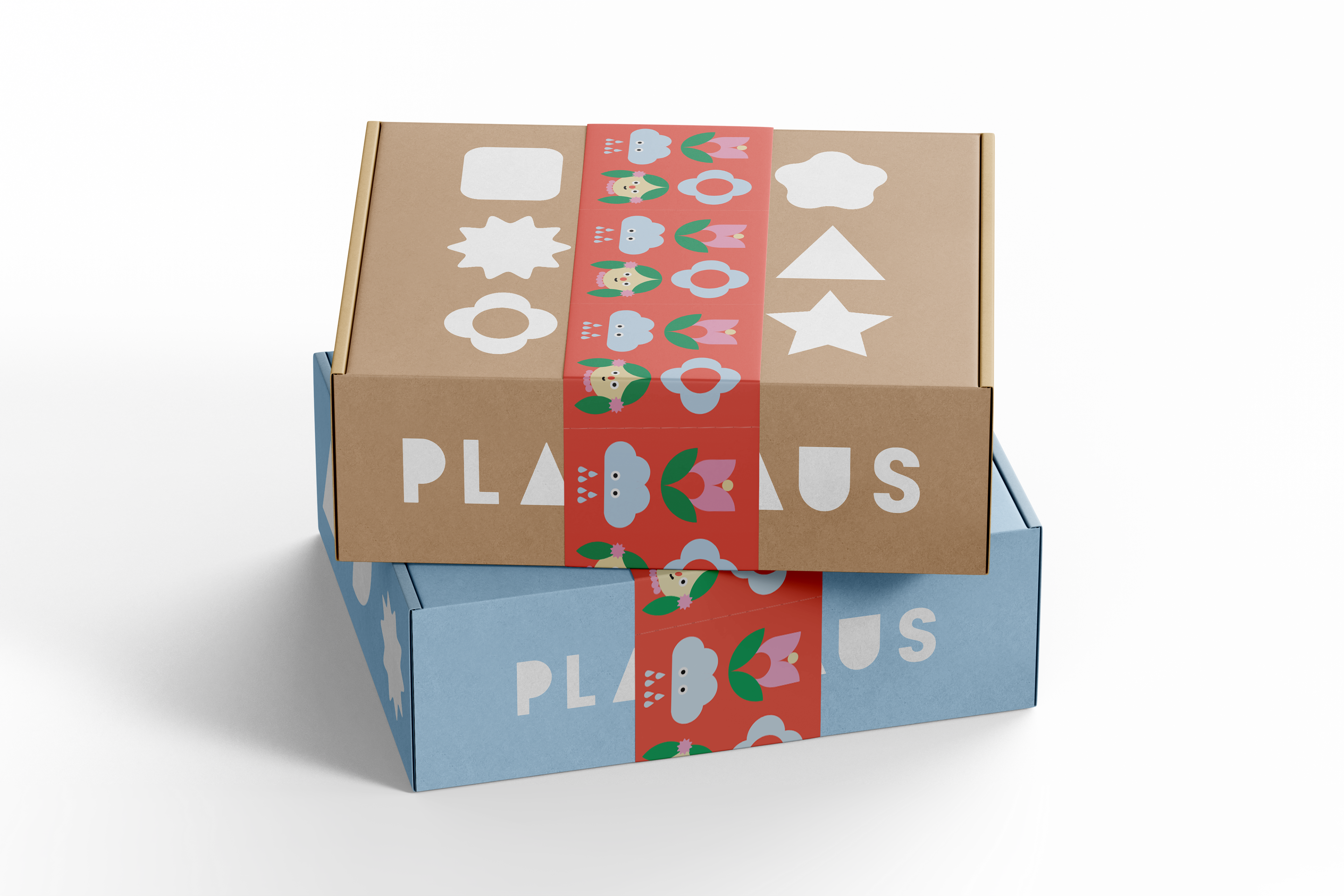
Playhaus is a creative subscription box that introduces kids to foundational design principles through play. The project explores how physical interaction with shape, form, and composition can support the development of visual thinking.
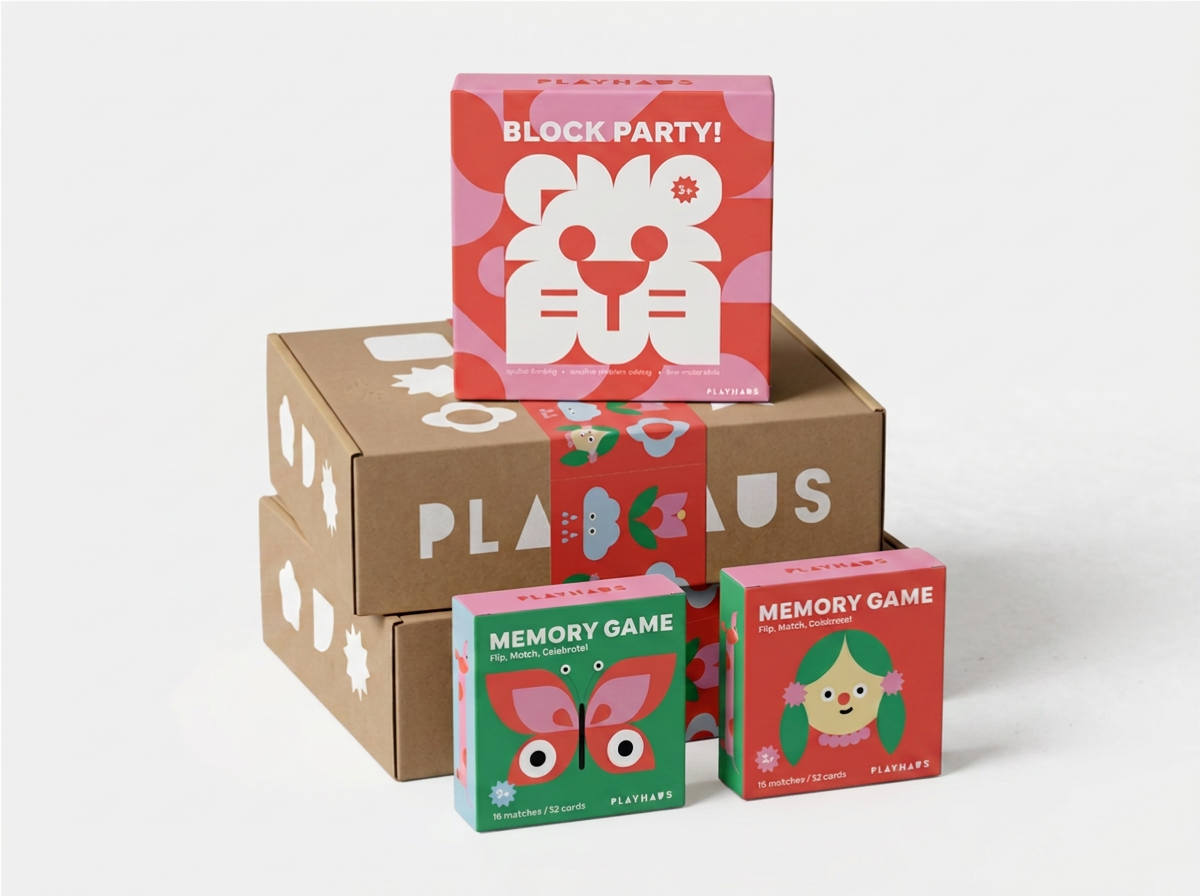
Included within this first kit is a set of stencils, wooden blocks, a memory game, and more, each designed as reusable tools for ongoing creative exploration.
CONCEPT DEVELOPMENT
PlayHaus began with an observation: design is being introduced earlier and more often in elementary education, but the focus is often on software proficiency rather than foundational design principles. I wanted to explore how children could engage with these concepts through hands-on play.
RESEARCH
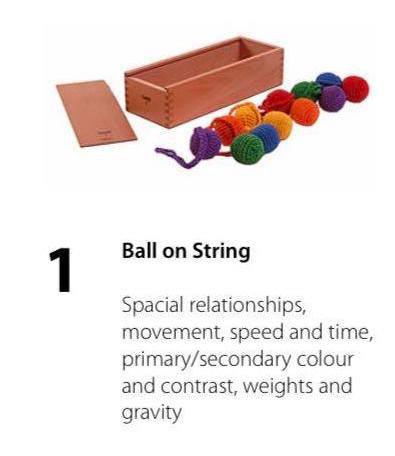
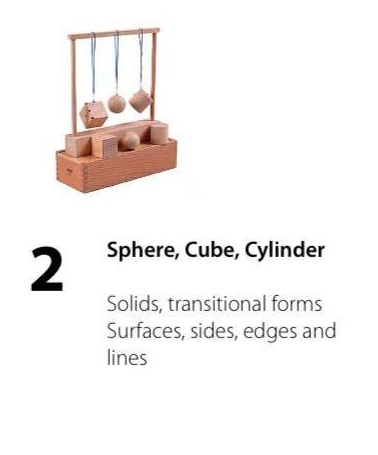
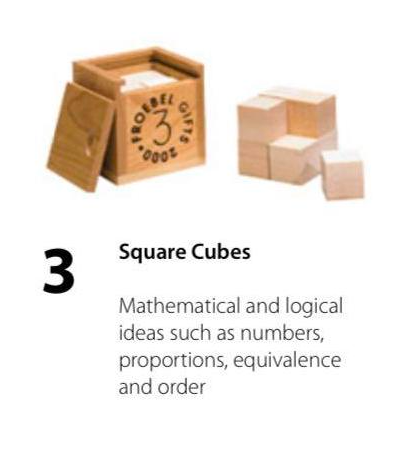
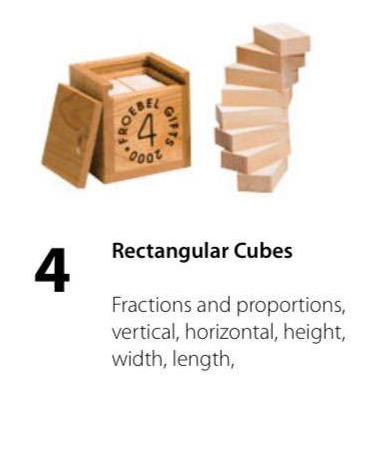
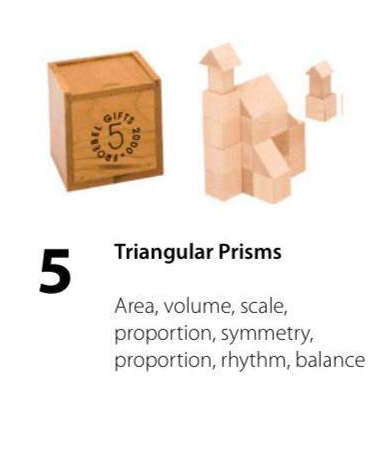
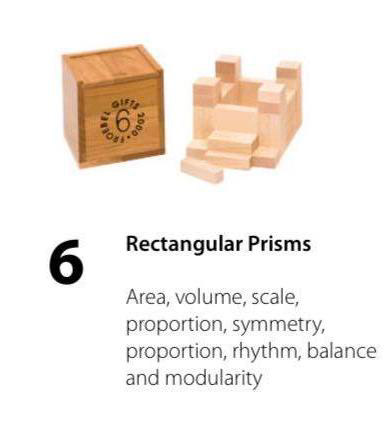
I looked at Bauhaus teaching methods and early kindergarten models, focusing on how simple exercises using shape, color, and form encouraged creativity and visual thinking. This research informed the kit’s hands-on and open-ended approach.
01 Stencil Set
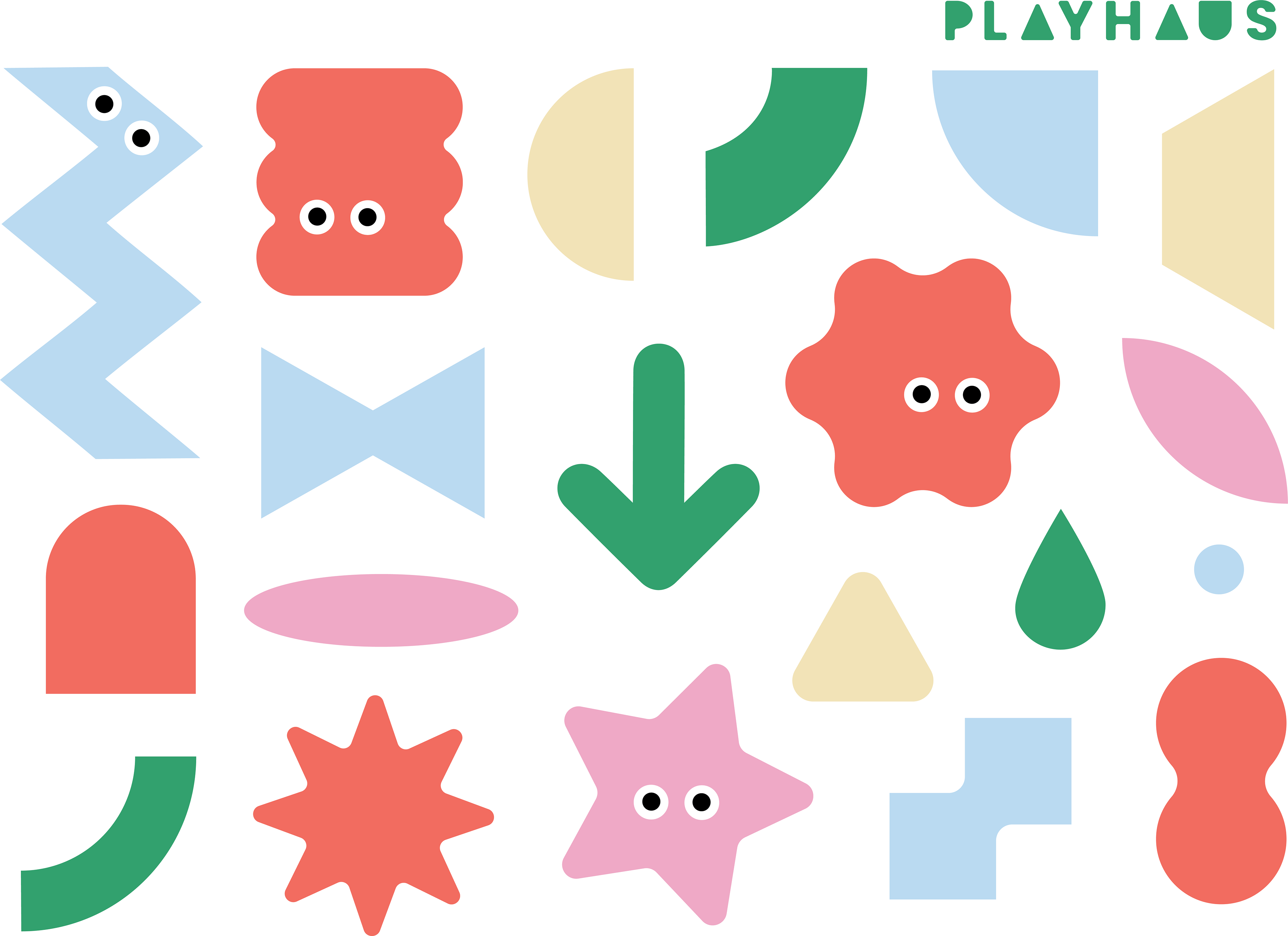
The stencils established the core idea of PlayHaus: breaking complex images down into simple shapes.
Rather than drawing from observation, children build images using a limited set of geometric forms. This encourages them to experiment with placement, scale, and repetition.
The final set of stencils is produced on 5x8in. clear, acrylic sheets. Transparency allows the shapes to be easily layered and repositioned.
02 Memory Game
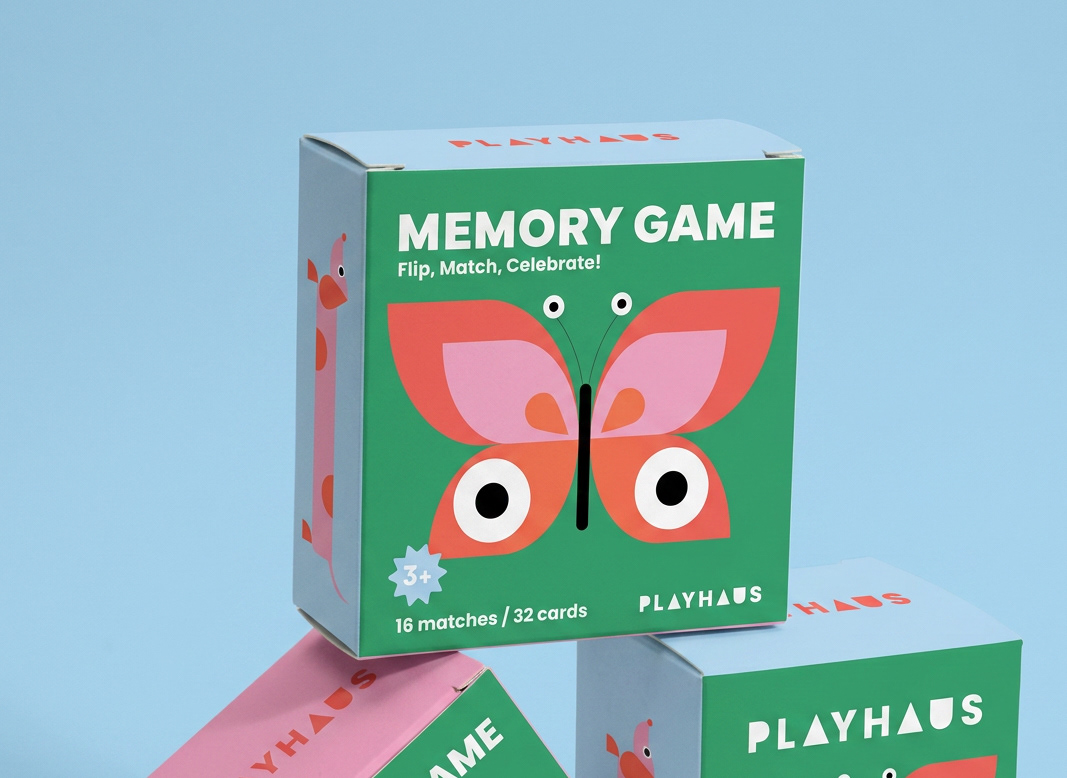
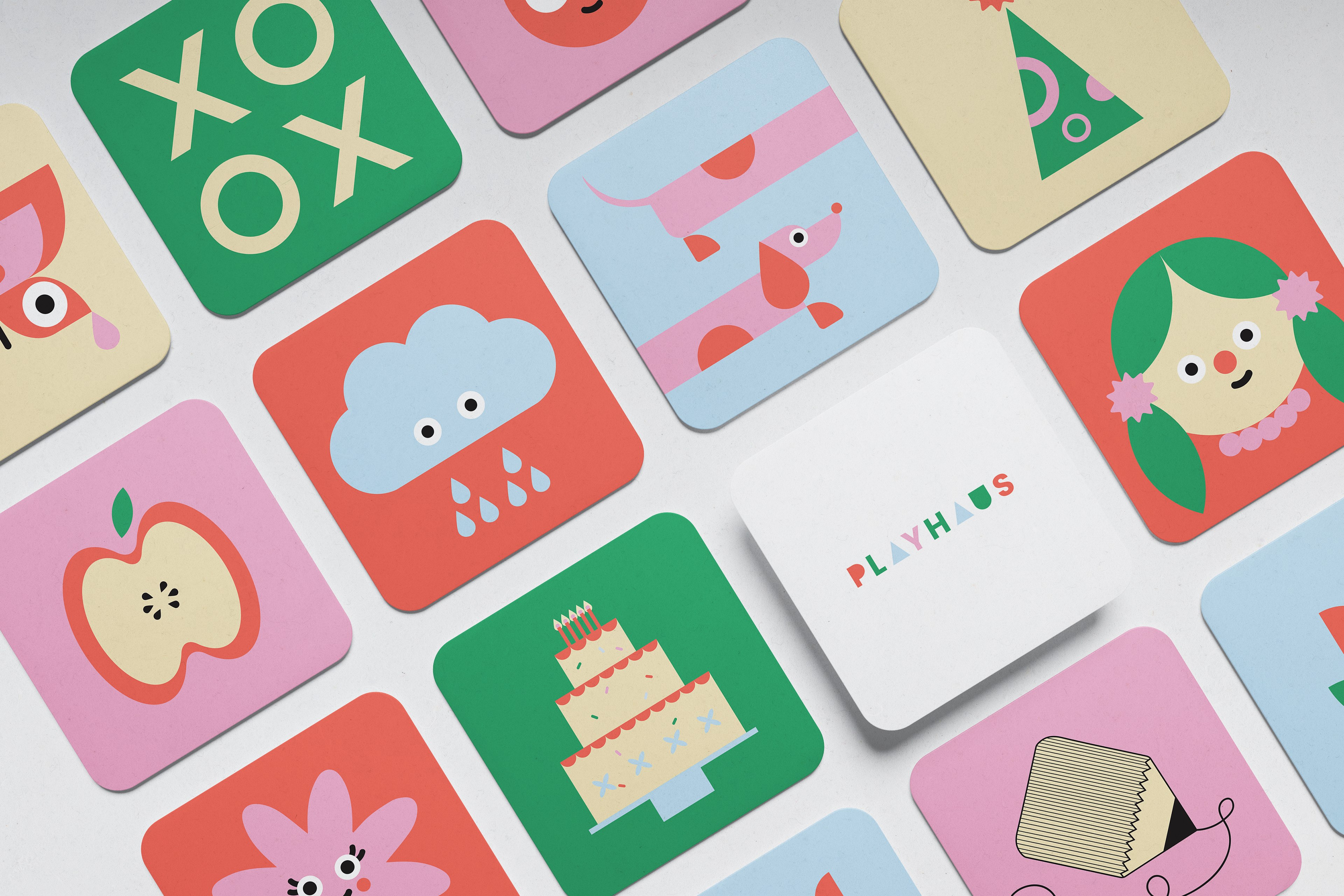
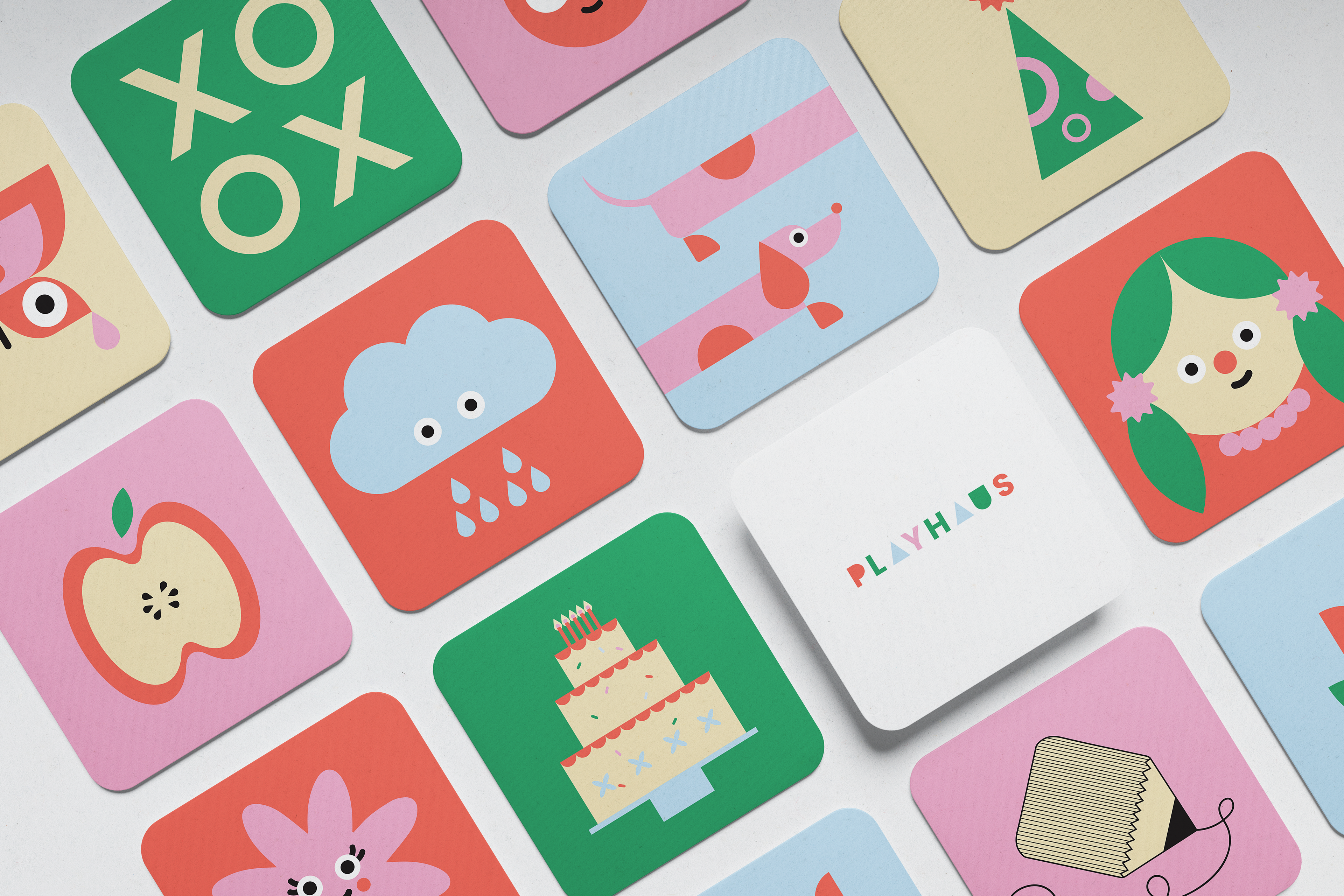
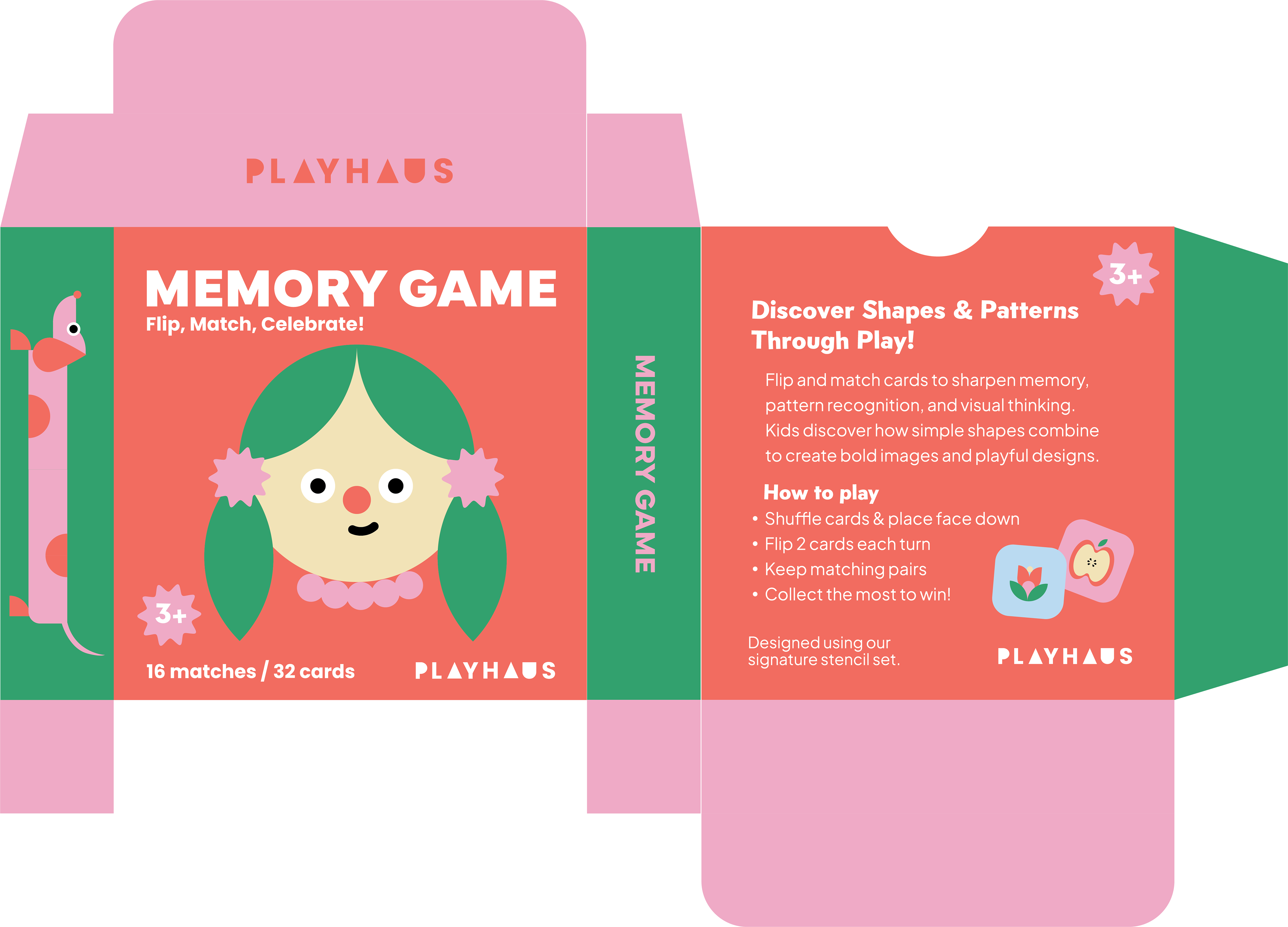
The memory game component emerged from a moment of constraint. When I found myself stuck, I returned to the stencil set and began experimenting with how its shapes could be used. What started as a simple exercise became a set of playful, cohesive icons.
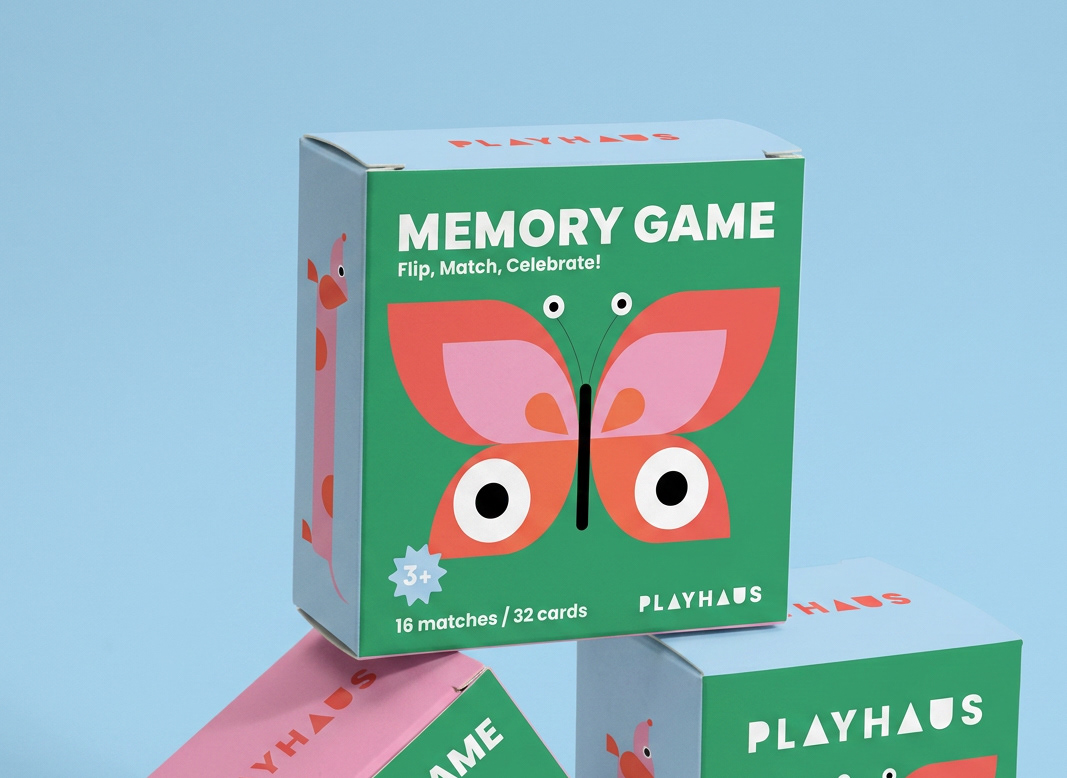
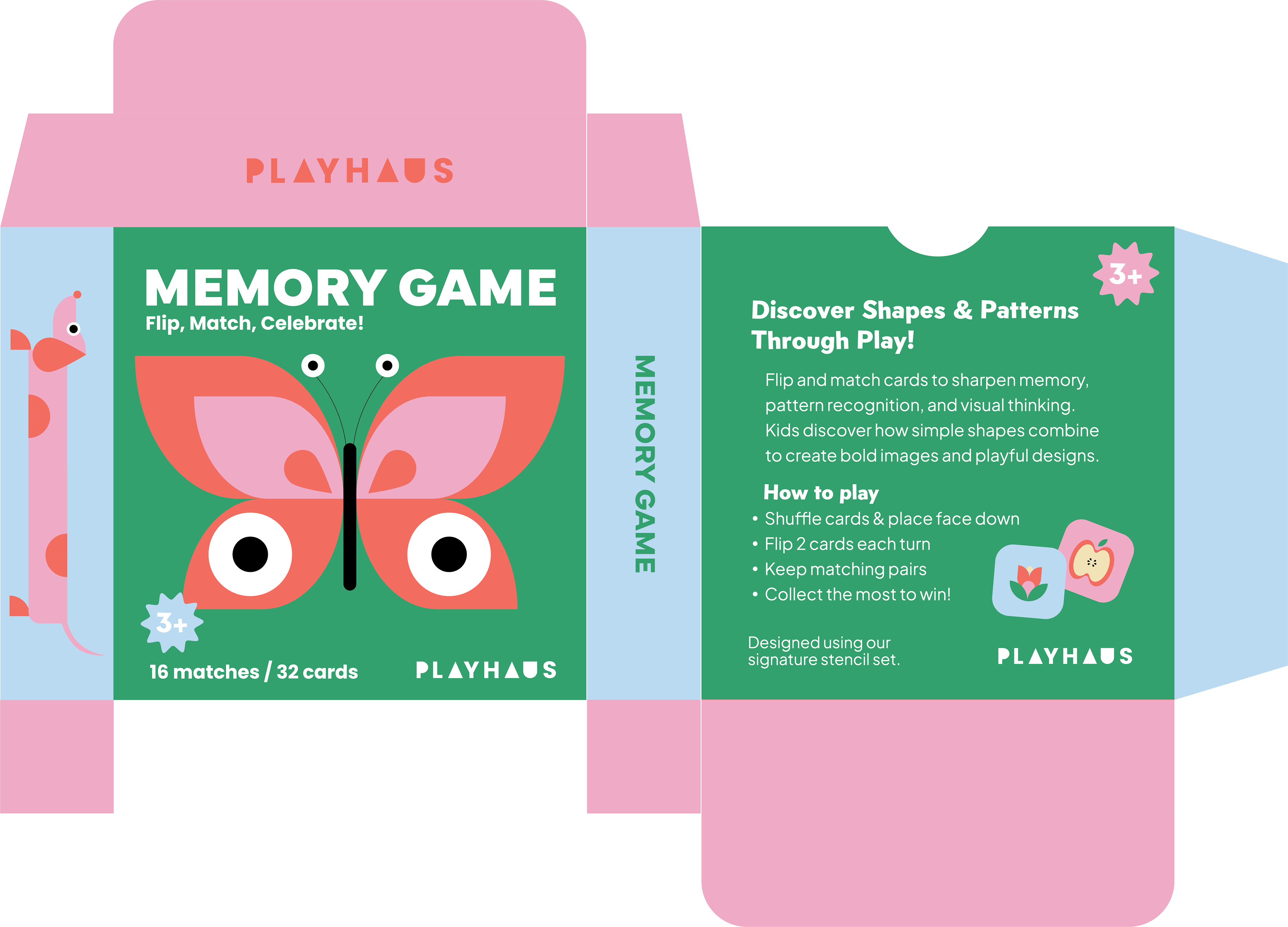
The final game consists of 32 cards (16 matches), and two designs for packaging tuck boxes.
03 PATTERN BLOCKS
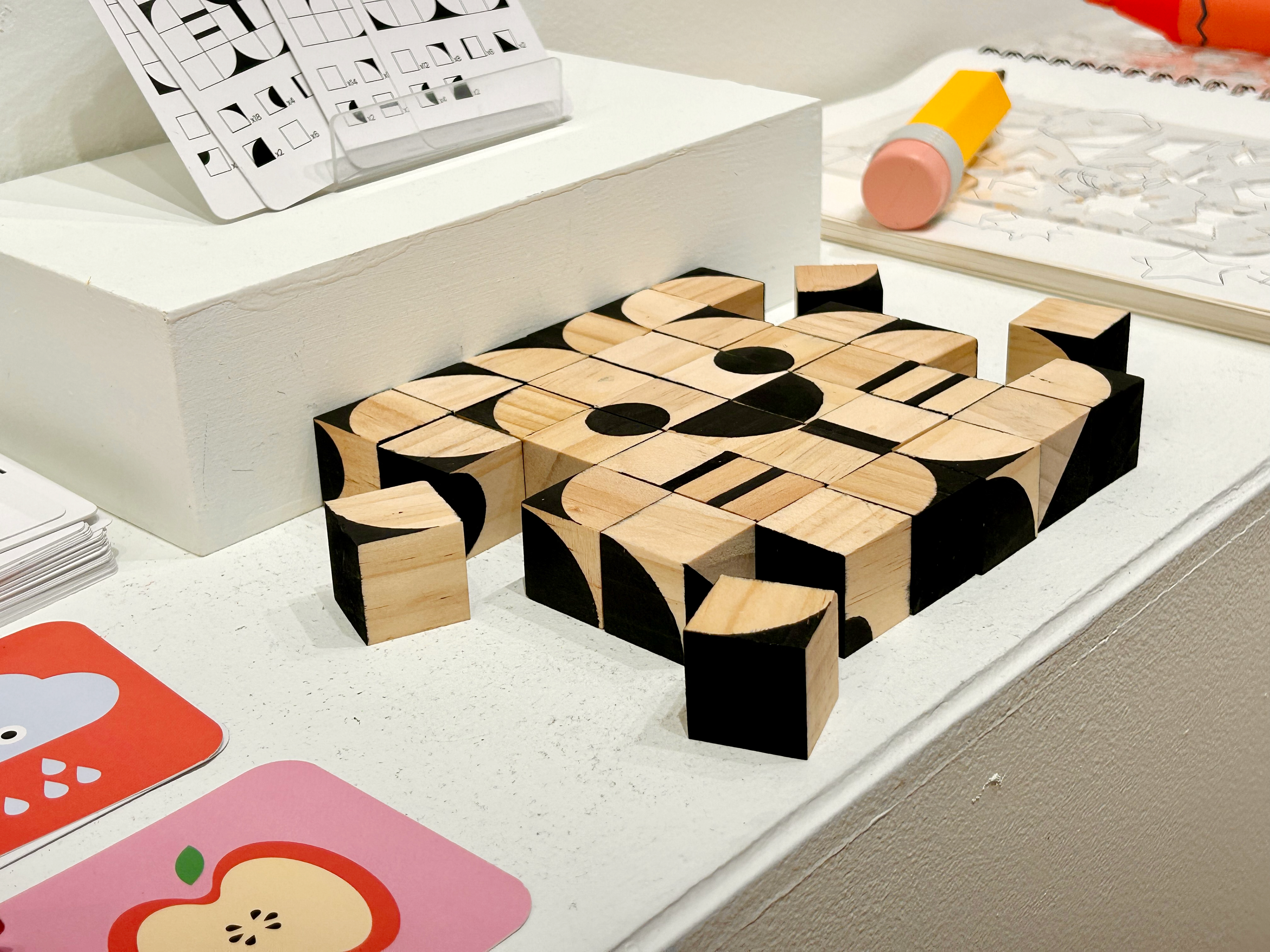
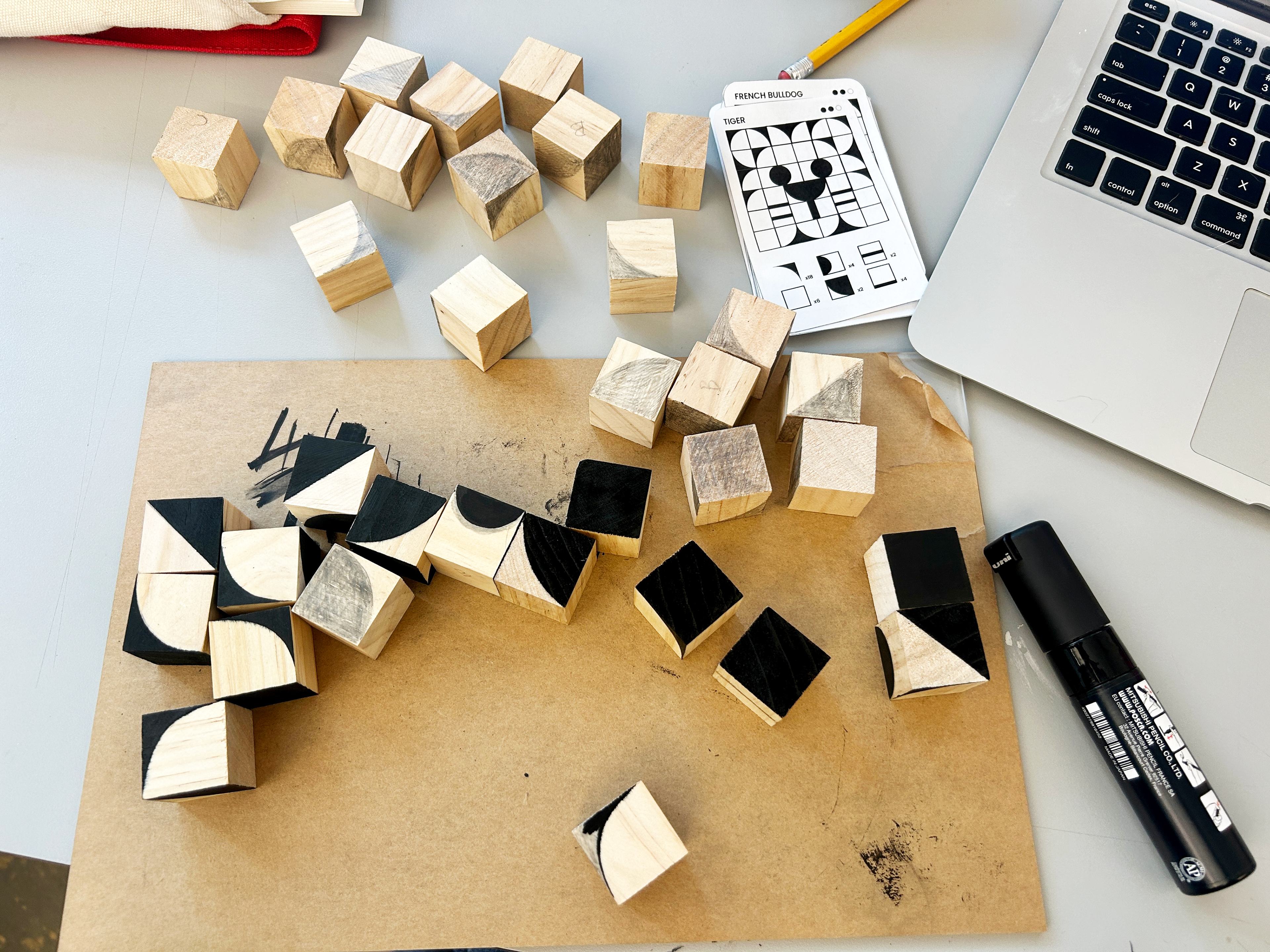
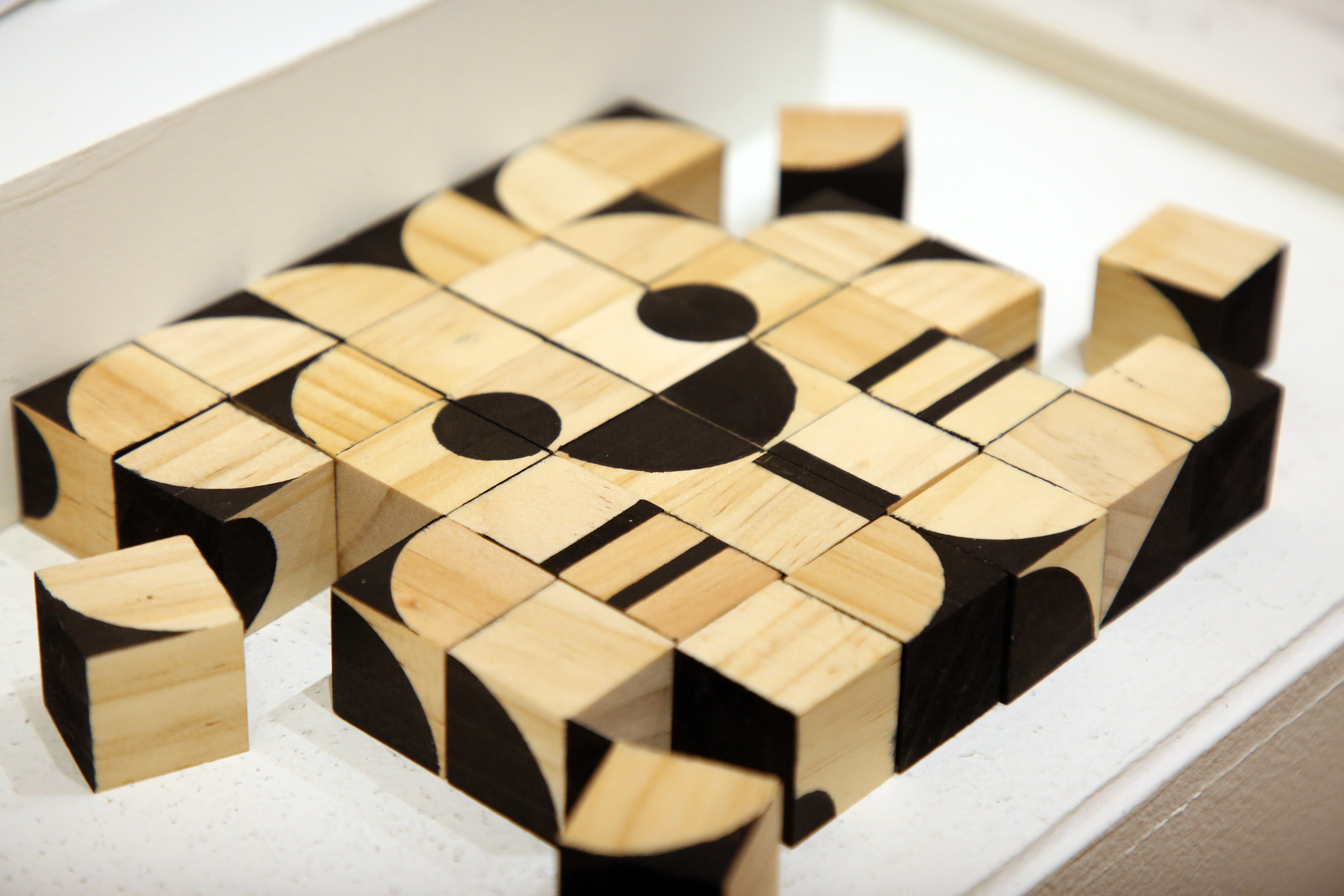
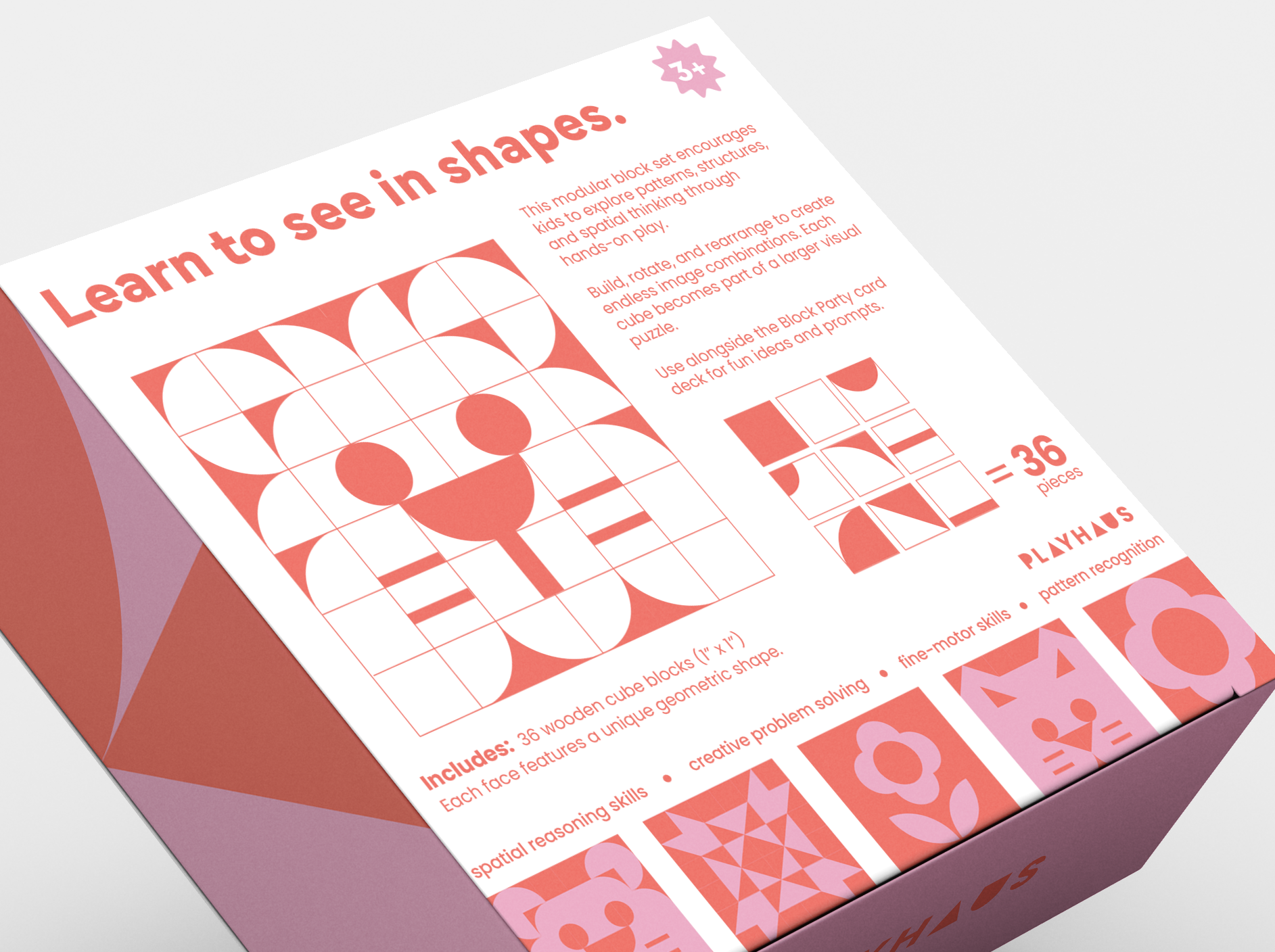
Block Party is a set of 36 one-inch wooden cubes, each face presenting a simple geometric form.
This component is included in the kit as a way to introduce design thinking. Kids are encouraged to construct basic patterns and images using these simple shapes.
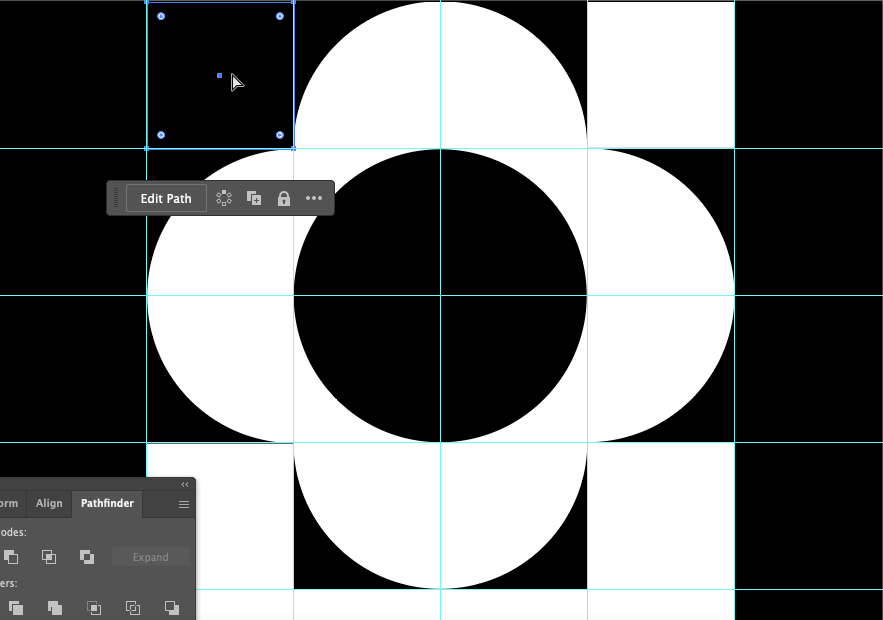
Through experimentation, I narrowed the system down to a small set of forms. Some are repeated across every block, and others used more selectively to create variation.
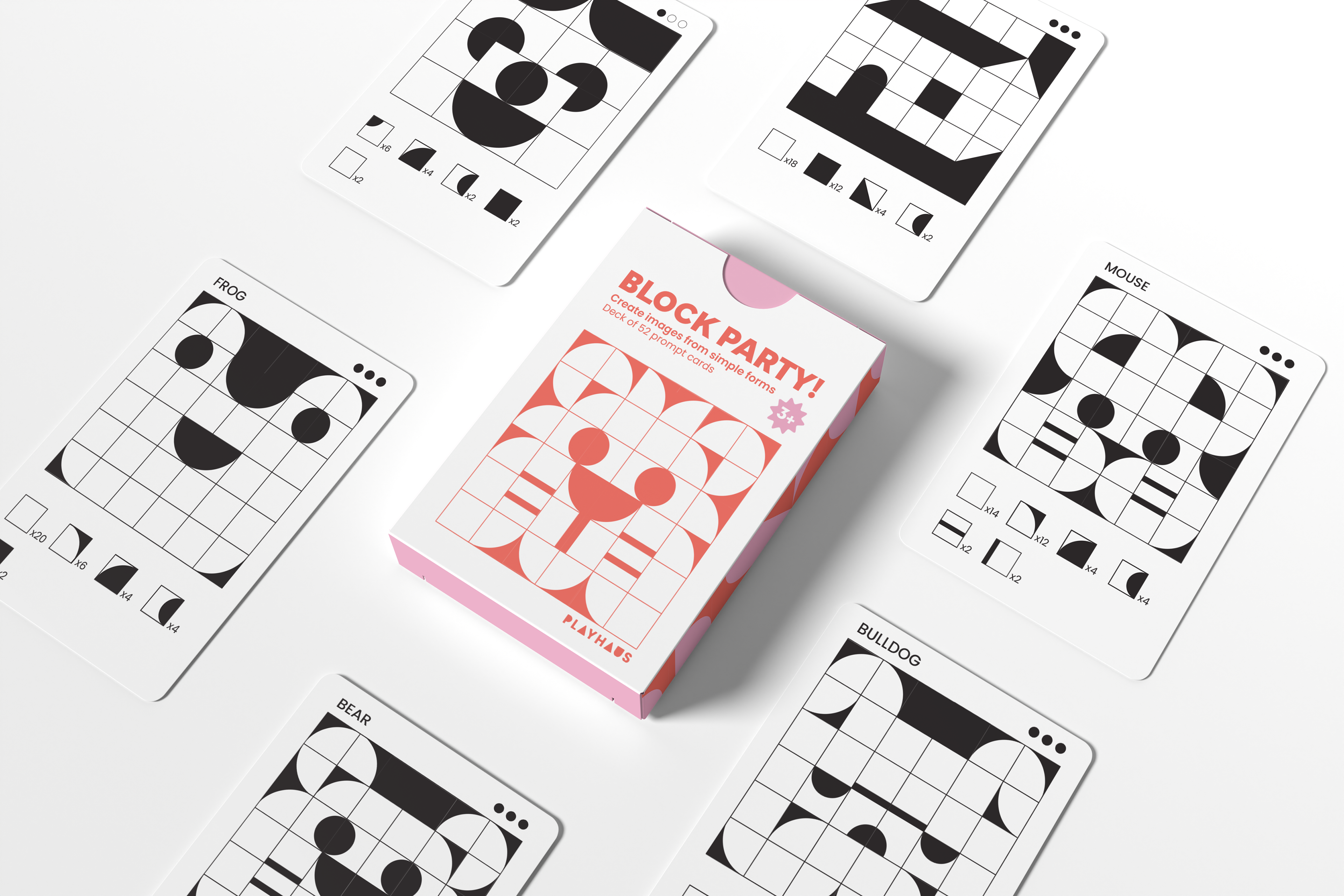
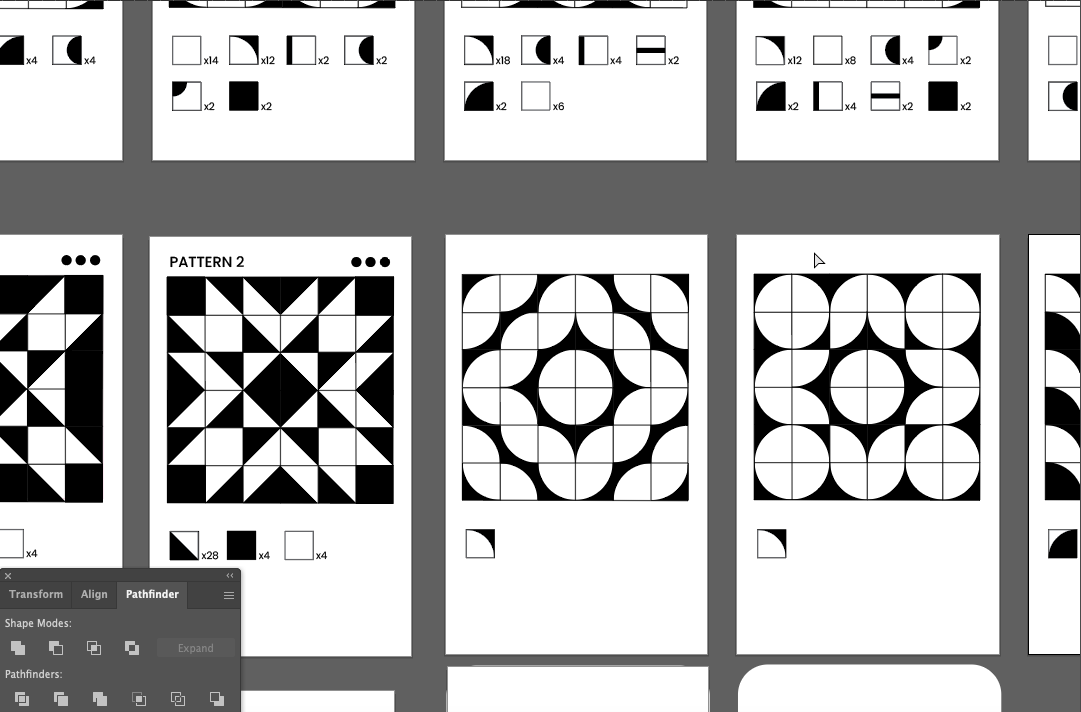
In addition to the blocks themselves, I developed a deck of prompt cards that demonstrate different images users can recreate.
Each card introduces one of three different difficulty levels by changing the number of blocks required.
The larger grid offers more possibilities but can feel overwhelming for younger users. Scaled levels make the activity more approachable while encouraging progression.